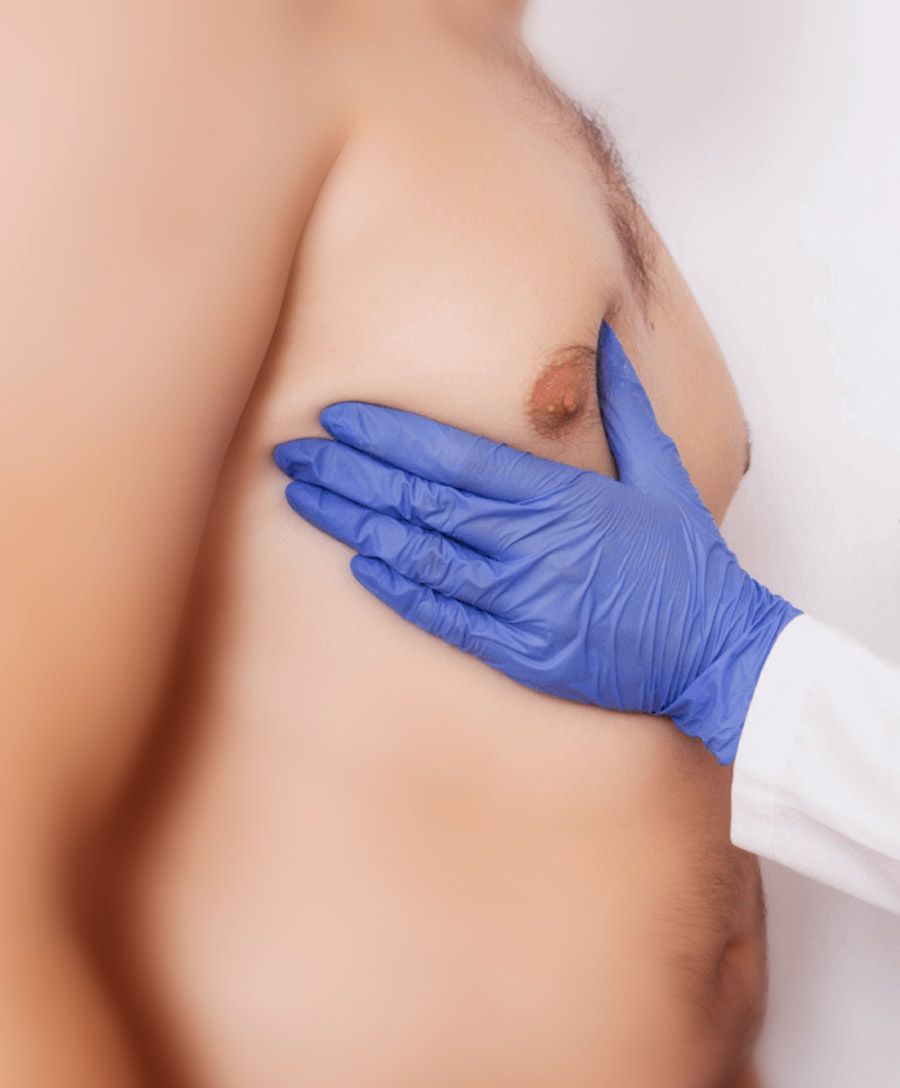
Gynecomastia in men is defined as the enlargement of the male breast(s) and is characterized by excess localized fat and overdevelopment of glandular tissue with or without excess breast skin. The causes of gynecomastia are multiple and can be the result of hormonal changes, heredity, obesity, excessive alcohol consumption or illicit drug use, and the side effects of certain prescription medications.
Gynecomastia surgery, also known as male breast reduction, is a cosmetic and reconstructive procedure used to reduce enlarged or overdeveloped breasts in men. It reshapes the chest to create a flatter, firmer, and more traditionally masculine contour by removing excess fat, glandular tissue, and sometimes loose skin.
The best candidates for male breast reduction are healthy adult men who have enlarged breasts that have persisted over time and cause embarrassment, shame, and self-esteem issues. Men who smoke are encouraged to quit before the surgery, and anyone considering male breast surgery should have realistic expectations about the results of the procedure.
As you try to determine whether you have gynecomastia, there are a few symptoms to look out for. The most common symptom is the swelling or enlargement of the breasts. Additional symptoms of gynecomastia can include:
In seeking to diagnose gynecomastia, your plastic surgeon will also need to rule out some other conditions, which can sometimes present with similar symptoms.
Men who struggle with obesity may experience pseudogynecomastia, a condition characterized by the development of fatty tissue around the breasts. For some men, deformity of the breasts may be a result of an abscess or infection. And while it is uncommon, it is possible for men to experience breast cancer, which may also result in breast enlargement.
Gynecomastia surgery is performed under general anesthesia on an outpatient basis. The procedure usually takes about an hour or two to complete, depending on the amount of tissue to be removed. For many men, liposuction of the chest is all that is needed to produce good results, and this is performed through small incisions.
If breast tissue needs to be excised, a small, semicircular incision will be required in the areola (skin surrounding the nipple) so that breast tissue can be removed while leaving the smallest scar possible. If excess skin needs to be removed and tightened as well, this will be performed through additional incisions before they are closed.
Find out how Dr. Peter Alam can transform your look – schedule your consultation today. As every individual's desires and needs are quite different, Dr. Alam will thoroughly discuss your goals and the benefits of surgical options and nonsurgical treatments. He will help guide and enable you to make the most informed and appropriate decision.
Schedule Your Consultation Schedule Your Consultation